
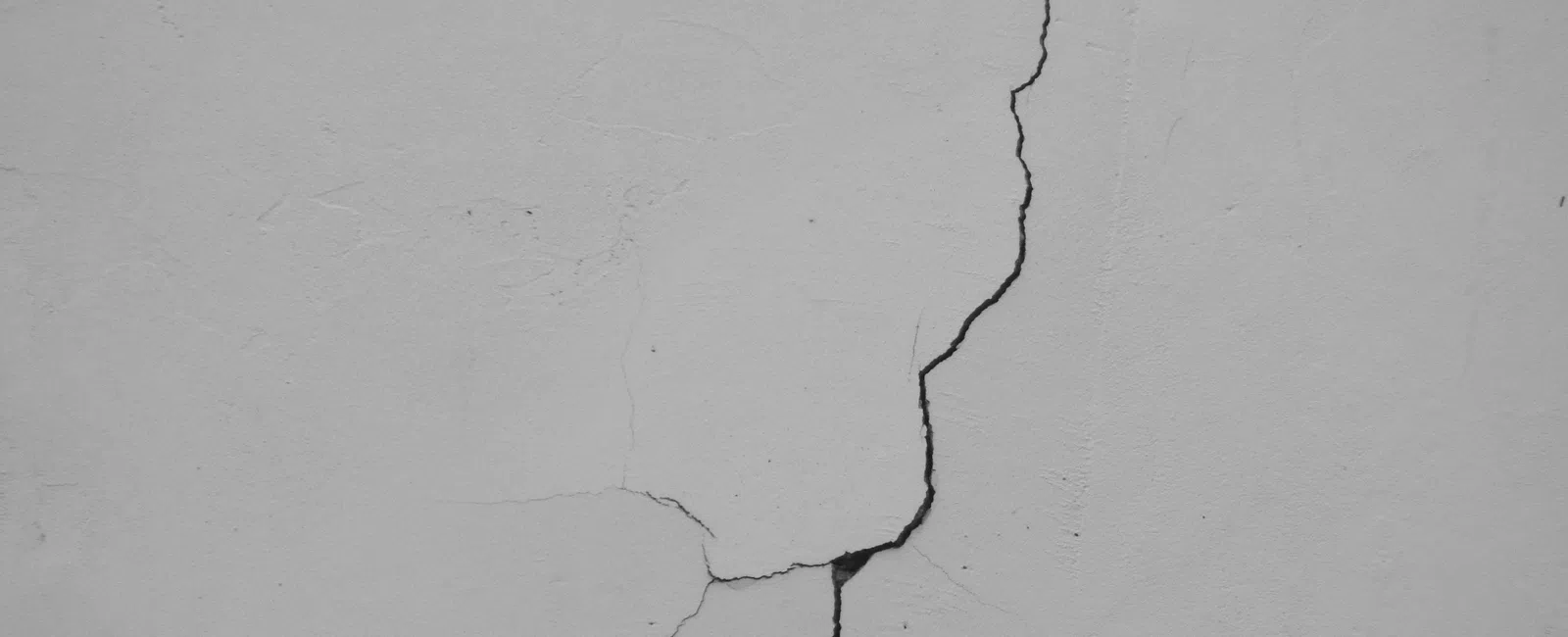
Most cracks in walls and ceilings are
cosmetic. A thin crack above a doorway or a hairline seam running across a
ceiling is usually drywall responding to a house that moves with the seasons,
and it is a patch-and-paint job rather than a structural problem. A much
smaller group of cracks tells you something is moving that shouldn't be, and those are worth looking at before anyone covers them up.
The difference has less to do with how long a
crack is than homeowners expect. What matters is where it sits, what shape it
takes, whether it is still changing, and whether anything else in the room has
started behaving differently.
What Normal Settling Cracks Look Like
House settling cracks show up in predictable
places, because drywall cracks where stress concentrates. The most common types
of drywall cracks are:
- Hairline cracks running at an angle from the top corner of a door or window frame. Those openings interrupt the framing, so movement concentrates at the corners.
- Straight cracks that follow a taped drywall seam, on a wall or a ceiling. These are settlement cracks in drywall showing you where the joint is, not where a problem is.
- A crack where the wall meets the ceiling, most often along an interior wall.
- Fine cracks in a ceiling that run in the same direction as the framing above them.
These are all common in metro Atlanta homes.
Humidity here swings widely between summer and winter, framing lumber takes on
and gives up moisture along with it, and drywall is a rigid surface fastened to
a material that moves. Something has to give, and it is almost always the joint
compound.
Age matters less than people assume. A 1970s
ranch in Marietta and a home built five years ago in Alpharetta can both show
hairline cracks in the ceiling for entirely ordinary reasons. In a newer home,
most of this movement happens in the first year or two as framing lumber dries
to the moisture content of the house around it.
The Cracks Worth a Closer Look
A handful of patterns deserve more than a
patch. None of them means a house is in trouble on its own, but each is a
reason to have someone look before the crack gets covered.
- Stair-step cracks in brick, block, or mortar, especially on an exterior or foundation wall. The stepped diagonal path follows the mortar joints and points toward uneven movement below.
- Horizontal cracks in a foundation or block wall. Horizontal cracking in masonry suggests pressure pushing against the wall rather than ordinary settling. Horizontal cracks in walls finished with drywall are usually far less concerning, but they are worth identifying correctly.
- Diagonal cracks in walls that run from a corner out into the open field of the wall, particularly when one end is noticeably wider than the other.
- A crack that reopens after it has been repaired. This is the single most useful signal a homeowner has. Joint compound does not fail on its own. If a crack comes back through a finished repair, whatever caused it is still moving.
- Cracks with company. Doors that have started to bind or will not latch, windows that stick, floors that feel out of level, or the same crack pattern repeating in more than one room.
- A ceiling crack with a sag, a stain, or bowing. That combination points to water or a load issue above it and should not wait for a seasonal check.
Structural cracks in walls are the exception rather than the rule. Most homeowners who go looking for them find ordinary settling instead, which is the outcome worth hoping for.
Why Some Ceiling Cracks Open in Winter and Close in Summer
If a gap appears where the ceiling meets an
interior wall every winter and closes again in warm weather, the likely cause
is truss uplift.
In a home framed with roof trusses, the top
and bottom chords sit in different conditions inside the attic. The difference
in temperature and moisture between them causes the truss to arch upward
slightly through the middle during cold months. Ceiling drywall is fastened to
those trusses, so it lifts with them and separates from the interior partition
walls below, which are not moving at all. When conditions even out, everything
settles back down.
Truss uplift cracks are a nuisance, not a
structural failure. Patching the gap each year does not work, because the
movement comes back on schedule. The usual remedy is crown molding fastened to
the ceiling only, so the molding rides up and down with the ceiling and hides
the joint instead of fighting it.
How to Monitor a Crack Before You Call Anyone
If you are not sure whether a crack is active,
give it a season and find out.
- Mark each end with a light pencil line and write the date beside it.
- Photograph the crack with something in the frame for scale.
- Note whether any doors or windows in that room have changed how they operate.
- Look at the same spot again after a full change of season.
A crack that has not moved in six months is almost certainly cosmetic. A crack that has lengthened, widened, or been joined by new ones is worth a professional opinion.
How the Repair Actually Goes
Once a crack is confirmed as cosmetic,
repairing it is a defined sequence rather than a smear of spackle. The old
joint compound is cut out along the length of the crack, new tape is embedded
in fresh compound, and the joint is floated out wider than most homeowners
expect so the repair disappears instead of telegraphing through the paint.
Texture is matched, then the area is primed and painted. On a ceiling, matching
the existing texture is usually the hardest part of the job and the part that
separates a clean repair from an obvious one.
Skipping the tape is the most common shortcut,
and it is the reason so many patched cracks come back within a year.
How JMJ Approaches Wall and Ceiling Cracks
JMJ Construction Group is a licensed general
contractor working with homeowners across metro Atlanta. When we look at a crack, we put it in one of three categories and
tell you which: leave it alone and watch it, repair it now, or get an engineer
to look before anyone touches it.
Worried About a Crack in Your Home?
Send us a photo or request a free estimate, and we will help you understand what you are looking at and what, if anything, it needs.
Frequently Asked Questions
Is it safe to live with ceiling cracks?
In most cases, yes. Hairline cracks in a
ceiling that follow a drywall seam or the direction of the framing are cosmetic
and are safe to live with while you decide when to repair them. Get a ceiling
crack looked at promptly if it comes with sagging, bowing, a water stain, or
falling debris, since those point to a water source or a load issue above the
ceiling rather than ordinary settling.
How can you tell if a crack is structural?
Structural cracks tend to announce themselves
through pattern and company rather than size. Stair-step cracking through brick
or block, horizontal cracking in a foundation wall, cracks that are wider at
one end, cracks that reopen after being repaired, and cracks appearing
alongside doors that bind or floors that feel out of level are the patterns
worth investigating. A single hairline crack above a door frame, with nothing
else changing in the house, almost never is.
Are ceiling cracks a big deal?
Usually not. Ceilings crack for the same
reason walls do, because rigid drywall is fastened to framing that expands and
contracts with the seasons. The types of ceiling cracks that matter are the
ones paired with sagging, staining, or movement that keeps progressing. The
rest are a finish repair.
How do I know if a wall crack is serious?
Mark both ends of the crack with a pencil, write the date next to it, photograph it, and look again after a full change of season. A crack that has not moved is cosmetic. A crack that has grown, widened at one end, or been joined by others is worth having a contractor or an engineer evaluate before it is repaired.
How many nail pops are normal?
There is no fixed number, and a scattering of
nail pops across a ceiling or wall is common, particularly in a home built
within the last few years. Nail pops in a ceiling are not dangerous. They are
fasteners backing out as framing lumber dries. They become worth investigating
only if they appear suddenly in large numbers across an area, or alongside
cracking and sagging in the same ceiling.